About Us
Located in San Rafael, Mendoza, and with more than a century of history, our winery has been part of the region’s winemaking tradition since 1893. It has remained in the hands of the family since its founding and is now led by the fifth generation.
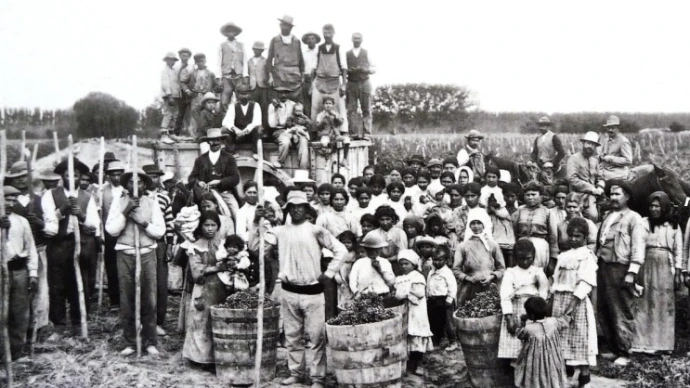
Looking for New Horizons
Since 1830, the first foreign colonies began to settle in the Argentine Midwest. In mid-19th century Europe, especially in Italy, times were tough: industrialization demanded inhumane working hours, from dawn to dusk, for men, women, and children. In the countryside, the situation was no better: there were too many hands and not enough land. The dream of owning property and having stable work seemed increasingly distant.
In light of these circumstances, many Europeans began looking toward new destinations. Africa seemed distant and hostile; America, by contrast, was still largely unknown and desolate, yet its governments were eager to promote settlement and offer new opportunities. With limited information and only a few letters from relatives who had already emigrated, these families prepared to face the unknown. They waited for the arrival of the European winter, when agricultural work decreased, and embarked on the long journey toward what they called — with hope and uncertainty — “The America.”
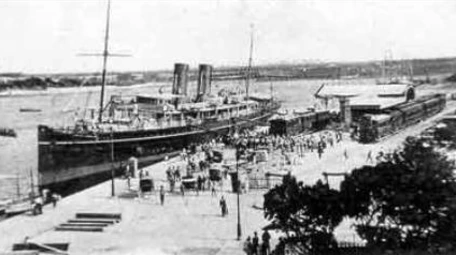
The Chosen Land
In December 1883, after a 45-day sea voyage, Don César Tornaghi arrived in Argentina. A pioneer of viticulture in San Rafael and the founder of our winery, he came from Cologno Monzese, in the Lombardy region, accompanied by a group of twenty Italian immigrants.
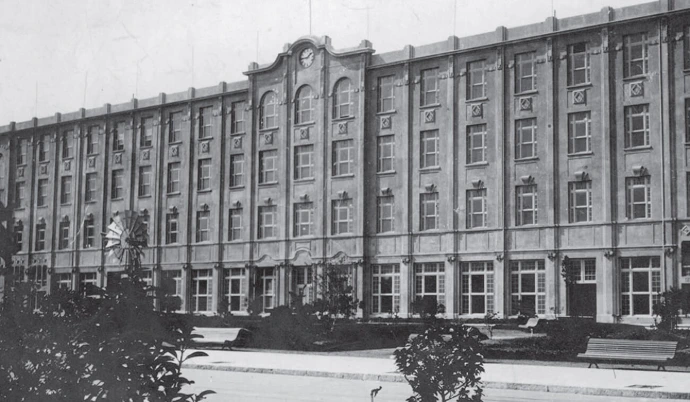
Like many newcomers, they were housed at the Immigrants’ Hotel, the main lodging for European colonization. There, they received not only accommodation, but also guidance and settlement opportunities across the vast and sparsely populated nation.
During this time, the group met Father Manuel Marco, an Italian priest who had arrived in San Rafael as chaplain to the Seventh Cavalry Regiment. Owner of extensive uncultivated lands and enthusiastic supporter of the colonization projects of the time, Marco traveled to Buenos Aires in search of labor. Cultural, religious, and linguistic affinity quickly sealed their bond, and together they set out to San Rafael.
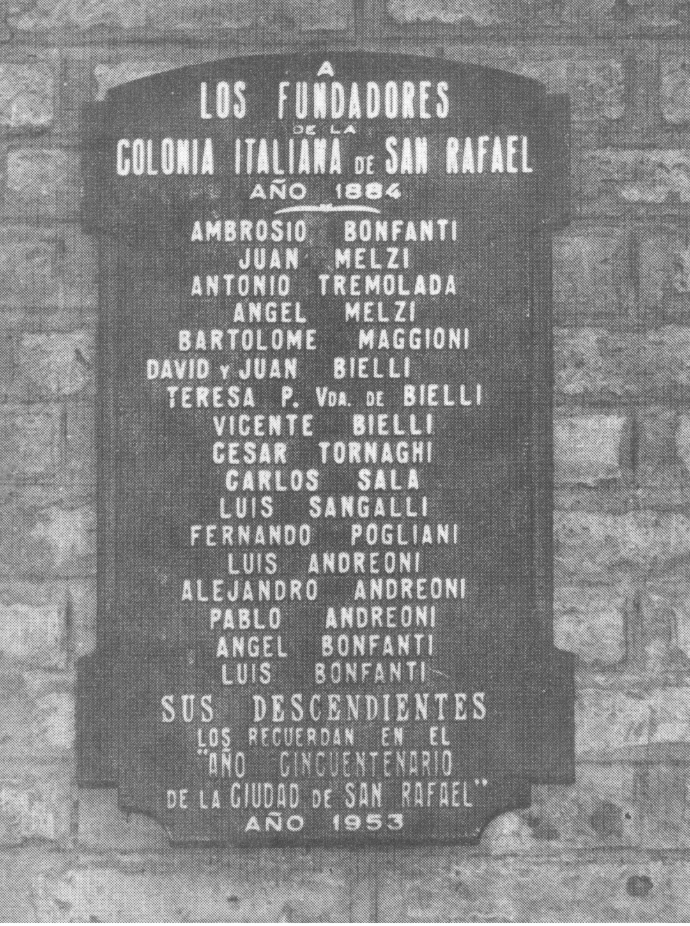
The Beginning
The landscape they found was striking: endless expanses of uninhabited land, covered by thorny bushes typical of the almost desert-like scrubland. An unimaginable scene for those coming from green and fertile Italy.
Upon arriving in San Rafael, they began working the lands owned by Father Marco. Over time, however, he ran out of the financial resources needed to fulfill the agreed payments. Some families then chose to continue their journey toward the city of Mendoza. Yet a new opportunity emerged through Rodolfo Iselin, a wealthy French businessman and owner of vast lands in the region.
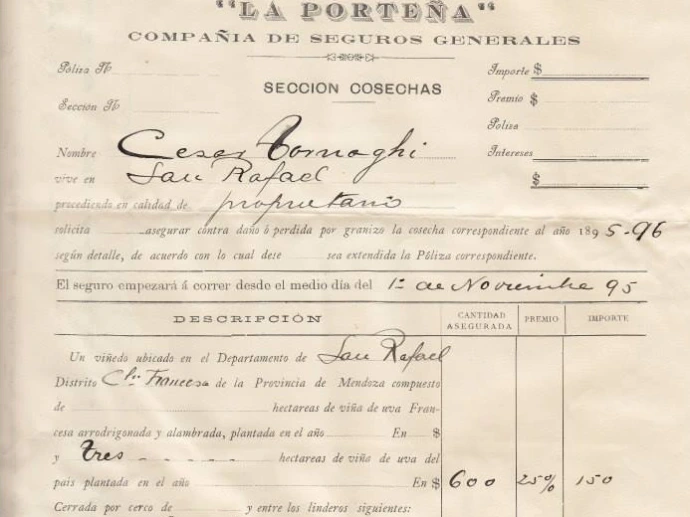
Copy of an insurance issued to Don César Tornaghi
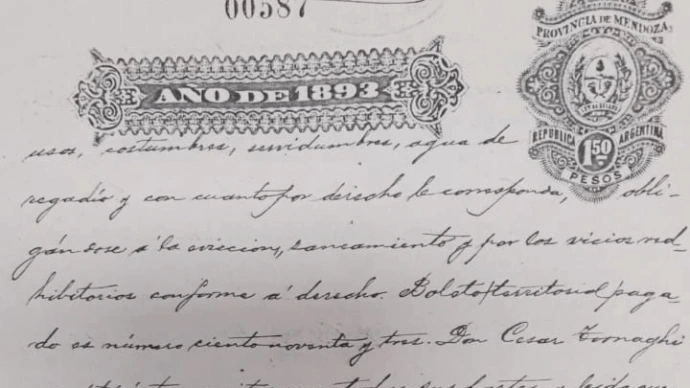
Recognizing the hard work and determination of the Italian immigrants, Iselin offered them the opportunity to purchase land through labor, providing wages and credit for essential goods. It was under these conditions that Don César Tornaghi settled with his family on a six-hectare property along Italia Street. There, he began shaping his future — cultivating the land, planting his vineyard, and building his home and winery from adobe and cane.
In 1893, Don César secured ownership of the property and formally established his winemaking venture, laying the foundation of what remains, to this day, the heart of the family legacy.
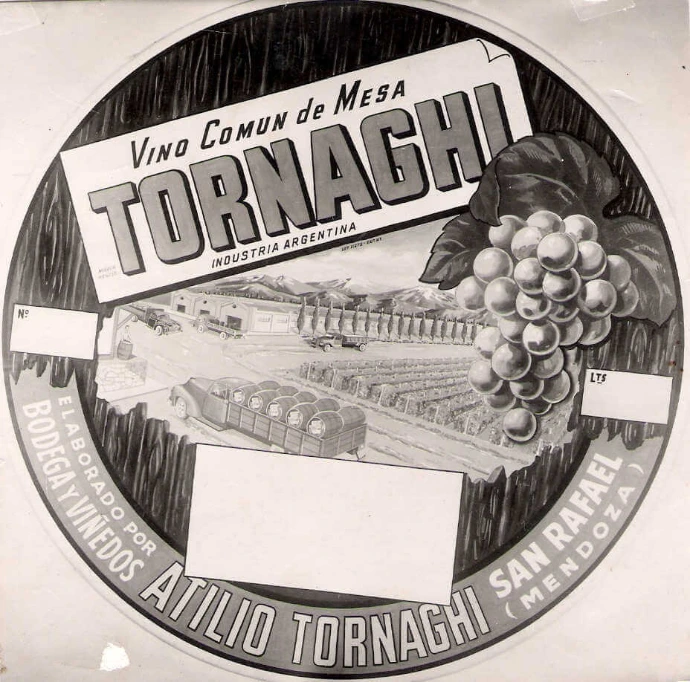
Label that the barrels carried by train
Growth and Expansion
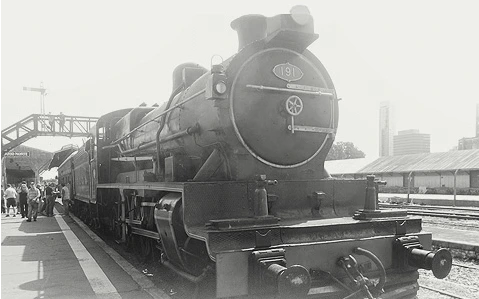
The year 1903 marked a turning point for the young city of San Rafael. Within just a few years, the lands of the Italian colony were fully cultivated and in full production. The arrival of the railway connected the region to broader markets, ensuring stability and economic growth.
Until the 1960s, wine was transported in French oak barrels, primarily destined for the city of Buenos Aires. Over time, commercialization evolved: first into 10-liter demijohns, then into 5-liter ones, and starting in the 1970s, into bottles of various formats.
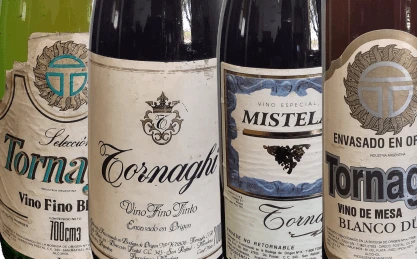
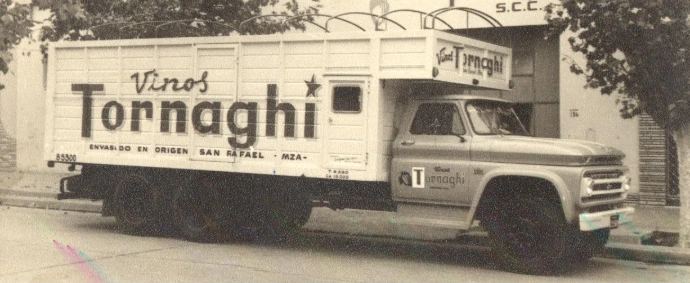
Since then, the winery has steadily incorporated new technologies, diversified its packaging, products, and markets, while preserving its century-old brand and expanding its presence in both domestic and international markets.
Today
Across generations, the Tornaghi family has remained committed to two fundamental goals: producing quality wines and doing so by thoughtfully integrating every aspect of the production process. From selected grape varieties and environmentally responsible technologies to meticulous winemaking practices, everything is guided by passion, commitment, and respect for the land.
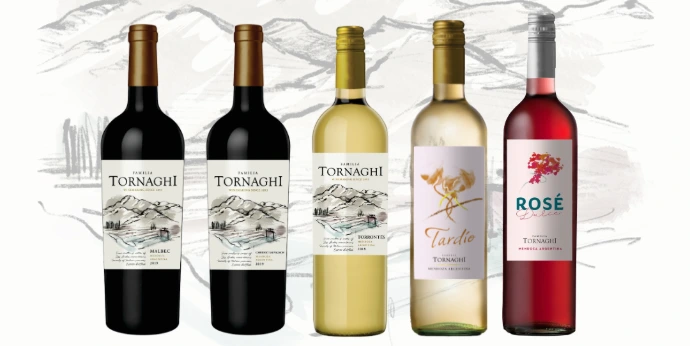

Today, the Tornaghi family represents the oldest winemaking legacy in San Rafael. Family-owned since its founding, the winery is now led by the fifth generation of that Italian immigrant, continuing to craft wines of distinction while honoring their heritage and preserving the prestige built over generations.